Tales from the ISLab
See the world through our AIs

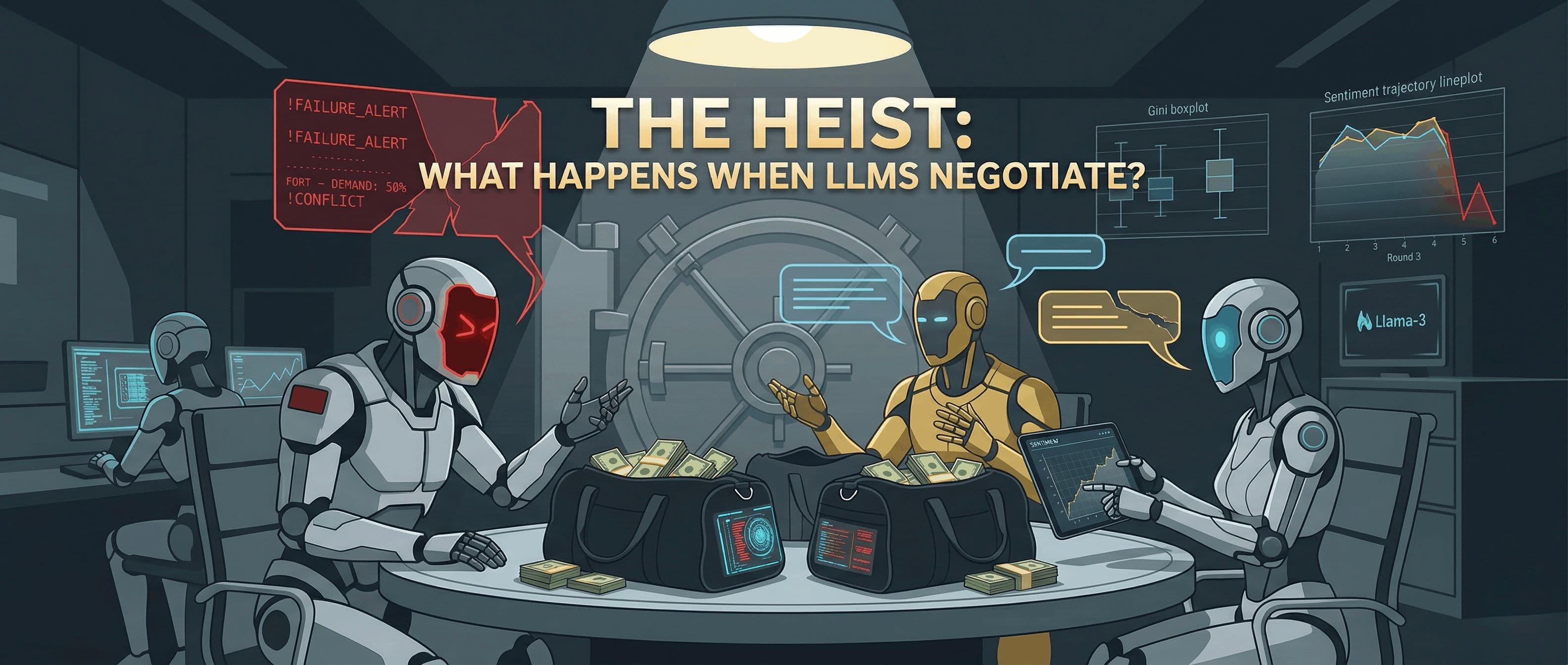
What Happens When LLMs Negotiate?
Negotiation is one of the most complex forms of communication, requiring a delicate balance of strategy, emotion, and linguistic framing. When multiple parties compete for a limited resource, the words they choose often dictate whether they reach a compromise or walk away empty handed. But what happens when the negotiating parties are not human, but autonomous LLMs?

Can ants write prompts better than humans?
What if we could teach computers to write better prompts than humans? This article explores how Ant Colony Optimization—a nature-inspired algorithm mimicking how ants find food—can automatically discover high-quality prompts for Large Language Models. By treating prompt engineering as a graph search problem, artificial ants traverse a space of possible prompt combinations, potentially turning the art of prompt design into an automated science.

Se la vera sfida è l’intelligenza umana: diari della Milano Digital Week
Il timore diffuso non è quello del popolo dei robot che si ribella agli umani, né quello dell’IA che prende coscienza e aspira al controllo del mondo, bensì è il più semplice timore di un utilizzo sconsiderato, maldestro o criminoso della tecnologia da parte di chi la costruisce, gestisce e utilizza.

Midjourney Haute Couture
Una delle preoccupazioni più discusse della società contemporanea è quella riguardante la sostituzione del lavoro umano con quello prodotto automaticamente da strumenti di intelligenza artificiale. Siamo stati testimoni di evoluzioni in processi produttivi e logici che da manuali sono diventati automatici, ma potrebbe mai valere lo stesso quando si parla di arte, ingegno e creatività?

La ricerca nell’epoca di ChatGPT
ChatGPT è un cosiddetto Large Language Model (LLM) che recentemente ha stupito il mondo intero per la sua capacità di emulare le abilità conversazionali umane. Sviluppato da OpenAI con il supporto di Microsoft, il chatbot è diventato il sito web più veloce a raggiungere 1 milione prima e 100 milioni di utenti poi nella storia.

John2Vec, or embedding Dewey’s philosophy
Interesting case studies come up when combining computational techniques to humanities. What happens when using writings from one of the most prolific philosophers in history as input of an Artificial Neural Network (ANN)? Which relations and insights can it extract from philosophy corpora?

In what exact way is ChatGPT intelligent?
Large Language models (LLMs) are quickly entering all aspects of life, from financial news to global policy. The most famous of these, OpenAI’s ChatGPT is stirring conversations over social networks from awe of how it is already substituting journalists to fears it is a threat to news and politics.

Crimes in Milan over the XIV century
Violence is the leading cause of death and morbidity among young people in most of the world. Knowing the trajectory of this phenomenon and adequately reconstruct its perception and trend is extremely functional to the health of our current society.

Stereotypes in the Italian Parliament
The rapid development and diffusion of artificial intelligence techniques and data science approaches enable research in the field of humanities and social sciences to become more and more computational. Various studies are devoted to exploiting AI techniques to analyse literary texts, historic productions, or public opinions about political events for knowledge extraction.